Google Maps Ranking: How to Rank Higher on Google Maps in 2026
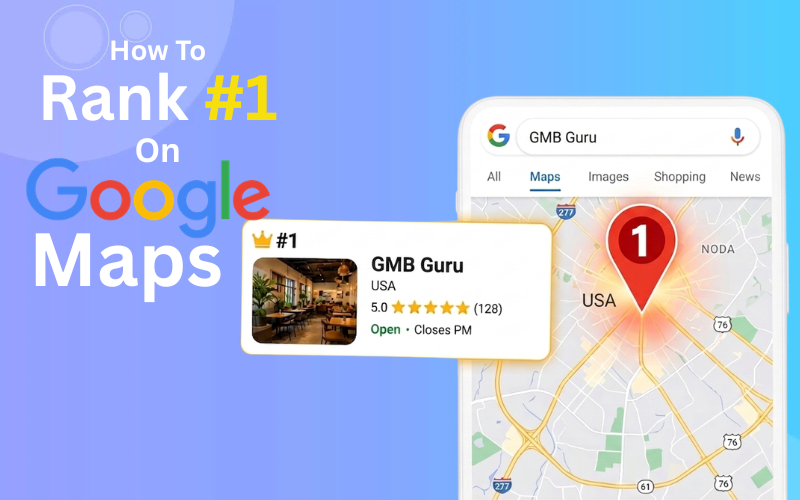
Google Maps has become one of the most powerful lead-generation platforms for local businesses. Whether you run a dental clinic, restaurant, law firm, HVAC company, salon, or marketing agency, your visibility on Google Maps can directly impact phone calls, website traffic, bookings, and revenue.
Today, customers search for businesses using terms like near me, best local services, and city-based keywords before making a purchase decision. If your business is not ranking on Google Maps, your competitors are getting the leads you should be receiving.
For many small businesses, ranking on Google Maps feels frustrating. They create a Google Business Profile, add a few photos, and expect results. But weeks later, they still don't appear in the Local Pack.
The reality is that Google Maps rankings require a strategic optimization process.
In this guide, you'll learn:
- Why companies don't appear on Google Maps
- How to rank on Google Maps effectively
- The most important Google Maps ranking factors
- How optimization improves local visibility
- Common mistakes hurting rankings
- Real-world ranking strategies
- How Google Business Profile optimization drives more leads
If your goal is to dominate local search results and generate more customers consistently, this guide will help you understand exactly what matters.
Why Most Businesses Fail to Rank on Google Maps
Many business owners believe that simply creating a Google Business Profile (GBP) will suffice in ranking higher on Google Maps; however, that isn't how local SEO works.
Google evaluates hundreds of local ranking signals before deciding which businesses appear in the Local Pack.
When your business profile lacks optimization, Google struggles to trust your relevance, authority, and location prominence.
Below are a few reasons businesses fail to rank:
Incomplete Google Business Profile
Many profiles are missing critical elements that Google uses to evaluate relevance and trustworthiness. A fully optimized Google Business Profile includes accurate business categories, keyword-rich service descriptions, regular photo uploads, complete opening hours, Q&A responses, and weekly business updates. Without these, Google has limited data to match your listing to relevant local searches — and your competitors who have completed their profiles will consistently outrank you.
- Proper primary and secondary categories
- Keyword-rich service descriptions
- High-quality photos (interior, exterior, team)
- Complete services and products sections
- Accurate opening hours including holidays
- FAQs and business updates
Poor Review Management
Businesses with few reviews, or those that never respond to reviews, consistently underperform in local rankings. Google measures review quality, frequency, diversity, and how actively a business engages with customer feedback. A business receiving one review per month will rarely compete with a competitor generating five or more reviews weekly. Learn the right strategies in our guide to Google Business Profile review management and growth — including how to ask for reviews, respond professionally, and maintain review velocity over time.
Weak Local SEO Signals
Many businesses focus entirely on their Google Business Profile and neglect the broader local SEO ecosystem. Google evaluates your business across the entire web, not just your GBP listing. Weak signals in any of these areas can hold rankings back:
- Local citations — consistent business mentions across directories like Yelp, Bing Places, and Apple Maps. Read our full breakdown of how local citations improve Google rankings
- NAP consistency — your business Name, Address, and Phone number must be identical everywhere online
- Local landing pages — city and state-specific service pages that target geographic keywords
- Website authority — page speed, mobile optimization, schema markup, and internal linking
- Local keyword optimization — targeting city-based and service-based terms throughout your site
Without these signals working together, rankings remain weak regardless of how well your GBP is optimized.
Competitors Are More Optimized
Your competitors may be actively optimizing:
- Their Google Business Profile
- Local backlinks
- Geo-targeted content
- Customer engagement
- Review generation
This gives them a competitive advantage.
Lack of Geographic Relevance
Google prioritizes businesses that demonstrate clear relevance to the searcher's location.
If your website and profile lack city-based optimization, rankings may decline.
Spam and Fake Listings
In competitive industries, spam listings often dominate local search results. Businesses that don't actively optimize struggle to compete.
Strategic Google Maps Optimization
The good news is that Google Maps rankings can improve significantly when the right optimization strategies are implemented.
Google Maps SEO focuses on improving three core areas:
- Relevance
- Distance
- Prominence
When your business demonstrates strong signals in these areas, rankings improve.
The solution involves:
- Optimizing your Google Business Profile
- Improving local SEO
- Generating consistent reviews
- Building local authority
- Publishing local content
- Increasing engagement signals
- Maintaining profile activity
Businesses that consistently optimize their presence often experience:
- Higher Local Pack rankings
- More phone calls
- Increased website traffic
- Better customer trust
- More conversions
- Greater brand visibility
Now let's explore how to rank on Google Maps step by step.
How to Rank on Google Maps
Ranking on Google Maps requires a complete local SEO strategy. Businesses that dominate local search results usually follow a structured optimization process.
Below are the most effective strategies.
Claim and Verify Your Google Business Profile
Step one is claiming and verifying your Google Business Profile. Without verification, your business cannot fully appear in Google Maps or compete in local search results. Google offers several verification methods including video verification, phone, email, and postcard — the right method depends on your business type and location.
Once verified, your profile should be fully completed with:
- Accurate business name (exactly matching your signage and website)
- Correct address or service area
- Primary phone number
- Website URL
- Primary and secondary business categories
- Hours of operation including special hours
- High-quality photos (minimum 10–15 to start)
- Keyword-rich business description (750 characters)
Google trusts verified, fully-completed businesses significantly more than sparse or unverified listings. Verification is the foundation — optimization is what drives rankings.
Optimize Your Business Description
Your business description should clearly explain:
- Services
- Locations
- Expertise
- Unique value proposition
Naturally include local keywords and service-based keywords.
Example:
GMB Guru provides Google Maps ranking and local SEO services for small businesses looking to improve visibility, generate leads, and rank higher in local search results.
Avoid keyword stuffing.
Write naturally for users while helping Google understand your services.
Add High-Quality Photos Regularly
Photos improve user engagement and trust.
Businesses with active photo uploads often receive:
- More clicks
- More calls
- Higher engagement
- Better visibility
Recommended photo types:
- Team photos
- Office images
- Before-and-after images
- Products
- Services
- Customer interactions
- Branded visuals
Geo-tagged images may also strengthen local relevance.
Generate More Google Reviews
Reviews are one of the single most powerful Google Maps ranking factors. Businesses with a strong, consistent review profile routinely outrank competitors with better-optimized websites simply because of the trust and engagement signals reviews provide. The key is velocity — getting a steady stream of new reviews regularly, not just a burst followed by silence.
Effective review generation includes:
- Asking every customer at the point of service (in-person, SMS, or email)
- Sharing a direct Google review link to remove friction
- Responding to every review — positive and negative — within 24 hours
- Encouraging customers to mention specific services and your city
- Maintaining consistent review velocity (never incentivize or fake reviews)
For a complete playbook on building your review profile ethically, read our guide on how to get more Google reviews using ethical strategies. Authentic review growth improves trust, click-through rates, and ultimately your position in the Local Pack.
Respond to Reviews Professionally
Many businesses ignore review responses.
This is a mistake.
Review responses demonstrate:
- Active business management
- Customer engagement
- Trustworthiness
- Relevance
Responses should include:
- Gratitude
- Service references
- Local references
- Professional tone
Example:
Thank you for selecting Google Maps Optimization services in the USA. We truly value your business and look forward to helping it thrive.
This strengthens local SEO relevance.
Publish Google Business Profile Posts Weekly
Regular posting signals activity.
Businesses that consistently publish updates often improve engagement.
Post ideas include:
- Offers
- Updates
- Case studies
- Promotions
- Service highlights
- Customer success stories
- Industry tips
Weekly posting keeps your profile active.
Optimize Services and Products Sections
Many businesses leave these sections incomplete.
Adding detailed services helps Google understand:
- What you offer
- Which keywords matter
- Your specialization
Each service should include:
- Keywords
- Descriptions
- Benefits
- Geographic relevance
Example:
Google Maps SEO services for local businesses.
Build Consistent Local Citations
Local citations are online mentions of your business's Name, Address, and Phone number (NAP). They appear in business directories, review sites, social platforms, and data aggregators. Google cross-references these mentions to verify your business's legitimacy and location — making citation consistency a significant local ranking factor.
Your NAP must remain identical everywhere it appears online. Even minor differences — "St." vs "Street," missing suite numbers, or old phone numbers — create conflicting signals that erode Google's trust in your listing.
High-priority citation sources for US businesses:
- Yelp — major review and discovery platform
- Bing Places — Microsoft's local business directory
- Apple Maps — critical for iPhone users
- Facebook Business — social proof and local discovery
- BBB (Better Business Bureau) — trust signal
- Foursquare — feeds many downstream directories
- Chamber of Commerce directories — strong local authority
Building citations is a time-intensive but high-impact strategy. See exactly how it works in our detailed guide on how local citations improve Google Maps rankings — including which directories matter most and how to audit existing listings for inconsistencies.
Create Local Landing Pages
Local landing pages help businesses rank for city-based searches.
Examples:
- Google Maps SEO in USA
- Local SEO Services in USA
- Google Business Profile Optimization
Each page should include:
- Local keywords
- Service information
- Testimonials
- FAQs
- Location references
This improves geographic relevance.
Build Local Backlinks
Backlinks remain a powerful ranking factor.
Local backlinks improve authority.
Examples include:
- Local news websites
- Chambers of commerce
- Business directories
- Local blogs
- Sponsorships
- Industry partnerships
Quality matters more than quantity.
Improve Website SEO
Your website strongly impacts Google Maps rankings.
Important website SEO elements include:
- Mobile optimization
- Fast loading speed
- Local keywords
- Service pages
- Schema markup
- Internal linking
- Contact pages
- Trust signals
Google evaluates your website alongside your Business Profile.
Use Schema Markup
Schema markup helps search engines understand your business information.
Important schema types include:
- LocalBusiness schema
- Service schema
- Review schema
- FAQ schema
Schema improves search visibility and helps Google interpret your content.
Maintain NAP Consistency
NAP stands for:
- Name
- Address
- Phone Number
Inconsistent information across the internet damages local trust signals.
Ensure your NAP remains consistent everywhere.
Why Google Maps SEO Is Essential in 2026
Consumer behavior has changed dramatically.
Customers now:
- Search locally first
- Compare reviews instantly
- Make fast buying decisions
- Trust Google Maps listings heavily
If your business is invisible on Maps, your competitors gain the advantage.
Google Maps SEO is no longer optional for local businesses.
It is one of the highest ROI digital marketing channels available.
Why Businesses Choose Professional Google Maps SEO Services
Most business owners understand that Google Maps visibility matters — but consistently executing every optimization task while running a business is genuinely difficult. Review generation, GBP posting, citation auditing, competitor monitoring, and photo optimization all require ongoing attention.
Professional Google Maps SEO services handle every component of local visibility so business owners can focus on serving customers. Our managed approach includes:
- Full Google Business Profile audit and optimization
- Ongoing review generation strategy and response management
- Weekly GBP posts and photo uploads
- Local citation building and NAP consistency auditing
- Competitor analysis and ranking tracking
- Monthly reporting with ranking improvements
Businesses working with a dedicated GBP management agency typically see ranking improvements 2–3x faster than those optimizing independently, because the work is done consistently and correctly from the start.
Final Thoughts on Google Maps Ranking
Ranking #1 on Google Maps is not a one-time task — it's an ongoing process of optimization, engagement, and consistency. Businesses that commit to this process build a compounding local presence that gets stronger every month, while competitors who ignore it continue to lose ground.
A strong Google Maps presence delivers:
- More visibility in the Local Pack (the top 3 results)
- Higher customer trust through reviews and a complete profile
- More qualified local leads actively looking for your services
- Better conversion rates — customers who find you on Maps are ready to buy
- Sustainable growth that doesn't depend on paid advertising
The businesses that dominate local search results in 2026 are those that treat Google Business Profile optimization, review generation, local citations, and website SEO as a unified strategy — not isolated tasks. If your business is currently struggling to appear in the Local Pack, start with a full Google Business Profile audit to identify exactly what's holding your rankings back.
The sooner you optimize, the sooner you start generating more local traffic, phone calls, and customers from Google Maps.
Frequently Asked Questions (FAQs)
- Relevance – How well your business matches the search query
- Distance – How close your business is to the searcher
- Prominence – Your online reputation, reviews, backlinks, and local SEO authority